



Why disruption has become the true test of traveler experience
Business travel disruption reveals something important about your travel program: how effectively it supports travelers when plans change.
A delayed flight, a cancelled connection or an unexpected weather event can derail a traveler’s schedule, impact meetings, and create uncertainty. Because a travel experience is not judged when everything goes to plan, it is judged when things don’t.
Discover what travelers value
The moments that matter most
Not every stage of the travel journey carries the same weight. A traveler may complete dozens of routine trips each year without requiring any support. But when plans change unexpectedly, the importance of the travel program quickly comes into focus.
CTM’s 2026 Traveler Experience Survey found that human support is “most” valued when travelers experience delays and cancellations (43%) or need to make urgent changes (35%).
What these scenarios have in common is not simply inconvenience. They have consequences.
A delayed flight can jeopardize an important client meeting. A missed connection can impact a project timeline. A last-minute schedule change can create stress and uncertainty for both the traveler and their organization.
In these moments, traveler expectations shift.
Instead, the focus moves away from booking convenience and toward responsiveness, communication, and support. Travelers want to know help is available, decisions can be made quickly, and disruptions can be resolved with minimal impact.
These are often the moments travelers remember most. They are also the moments that increasingly shape how organizations evaluate the effectiveness of their travel programs.
What travelers need when plans change
A functional booking tool is not what travelers need when plans are disrupted.
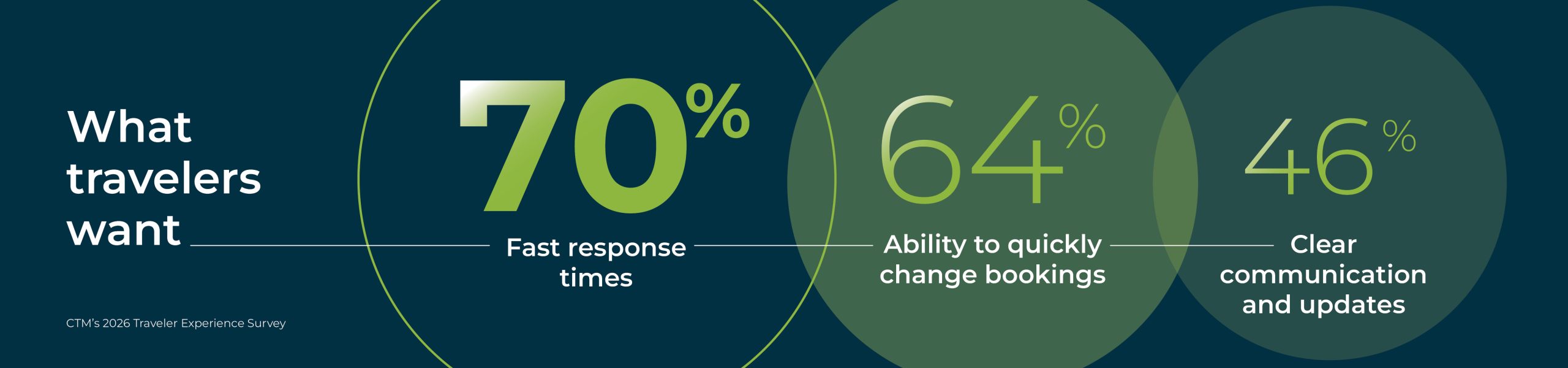
Travelers have spoken, and they want fast response times (70%), the ability to quickly change bookings (64%) and clear communication and updates (46%).
These findings suggest that travelers are not necessarily looking for more options during disruption. They are looking for certainty.
They want to know what is happening, what their alternatives are, and how quickly a solution can be found. This is particularly important when travel is tied to critical business outcomes. The longer uncertainty continues, the greater the impact on both the traveler and the organization.
The findings also reinforce an important point: responsiveness is becoming a core component of traveler experience. Travelers increasingly judge the effectiveness of a travel program not by what happens when everything goes according to plan, but by how quickly and effectively issues are resolved when it doesn’t.
In many ways, disruption has become the moment where traveler experience is either strengthened or undermined.
Why traveler experience is built during high-pressure moments
Travelers rarely remember when everything goes according to plan. A smooth booking process, an on-time flight, and a seamless hotel check-in are expected. They form part of the baseline experience.
What travelers remember are the moments where something changes unexpectedly and how effectively they are supported through it.
A delayed flight, a cancelled connection, or a last-minute itinerary change can quickly shift the focus from convenience to problem-solving. In these situations, travelers are looking for reassurance, guidance, and confidence that the issue can be resolved.
This is where traveler experience moves beyond functionality and becomes more personal. The quality of communication, the speed of response, and the ability to navigate uncertainty can have a lasting impact on how travelers perceive both the travel program and the organization supporting them.
In many ways, high-pressure moments reveal the true strength of a travel program. They demonstrate whether support models, processes, and technology are designed simply to facilitate travel or to actively support travelers when they need it most.
What does this mean for travel programs?
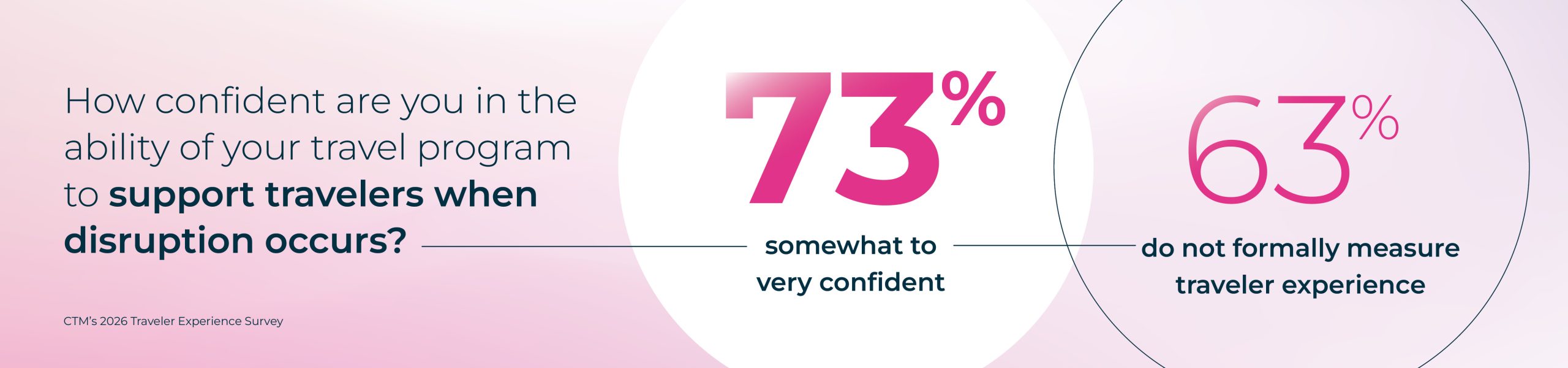
An important question for travel buyers to ask is: how confident are you in the ability of your travel program to support travelers when disruption occurs?
CTM’s survey found that 73% of respondents were somewhat to very confident in their travel program’s ability to support travelers when plans change. However, the findings also revealed that 63% do not formally measure traveler experience.
This raises another important question. If traveler experience is increasingly being defined during moments of disruption, how do organizations know whether their travel program is delivering the support travelers need?
The answer lies in looking beyond traditional measures of program performance.
While cost control, policy compliance, and booking adoption remain important, travelers are increasingly judging their experience through a different lens. They value fast responses, clear communication, flexibility when plans change, and confidence that support is available when they need it.
For travel programs, this means building operational readiness into the traveler experience. It means ensuring technology, service, communication, and support models work together to help travelers navigate uncertainty with minimal disruption.
Ultimately, the strongest travel programs are not simply designed to move travelers from one destination to another. They are designed to support travelers when circumstances change, helping them remain productive, informed, and confident throughout the journey.
Is your travel program ready when plans change?
When disruption occurs, traveler expectations shift quickly.
Contact CTM for a travel program review
Why is business travel disruption important to traveler experience?
Business business travel disruption often becomes the defining moment of the travel journey. How quickly issues are resolved, how clearly travelers are informed, and how effectively support is delivered can have a significant impact on overall traveler experience.
What do travelers value most during business travel disruption?
According to CTM research, travelers place the greatest value on fast response times, the ability to quickly change bookings, and clear communication when plans change.
How can organizations improve support during travel disruption?
Organizations can improve support during disruption by combining responsive service models, clear communication processes, traveler visibility, and technology that helps travelers access assistance quickly.
Why do travelers remember disruption more than routine travel experiences?
Routine travel experiences are often expected. Travelers are more likely to remember how effectively they were supported during unexpected events such as delays, cancellations, or urgent itinerary changes.
How should organizations measure traveler experience during disruption?
Organizations should consider factors such as response times, communication quality, disruption resolution, traveler confidence, and support effectiveness alongside traditional satisfaction measures.