

10 practical tips for sustainable business travel programs
Learn moreHow can organizations make business travel more sustainable without impacting performance?
Organizations can make business travel more sustainable by embedding better choices into booking tools, travel policies, and supplier strategies, making it easier for travelers to select lower-impact options without adding friction.
For travel managers and sustainability leaders, the focus is not on reducing travel, but on making smarter travel decisions that balance emissions, cost, and traveler experience.
See sustainable choices in action
Why sustainable business travel programs are now a priority
Sustainability has become a core part of corporate strategy, governance, and reporting. For many organizations, business travel represents a significant portion of Scope 3 emissions, placing travel programs firmly in focus. At the same time, travel remains essential for collaboration, growth, and customer engagement. This creates a clear challenge: How do you reduce environmental impact while maintaining the value of business travel?
The answer lies in building a program where sustainable choices are visible, measurable, and easy to act on.
Where travel programs may fall short
Many organizations have sustainability goals in place, but struggle to translate them into day-to-day travel behaviors.
Common challenges include:
- Limited visibility of travel emissions data
- Booking tools that prioritize cost and schedule over sustainability
- Travel policies that lack clear sustainability guidance
- Low traveler awareness or engagement
Without integration across policy, technology, and supplier strategy, sustainability efforts can remain fragmented.
Make sustainable travel decisions easier
10 practical ways to strengthen your sustainable business travel program
These recommendations are drawn from Corporate Travel Management’s (CTM’s) experience working with organizations to design, implement, and optimize more sustainable travel programs.
While every program is different, these ten approaches reflect ways to reduce environmental impact, strengthen policy alignment, and support broader business sustainability goals.
1. Choose smarter routes
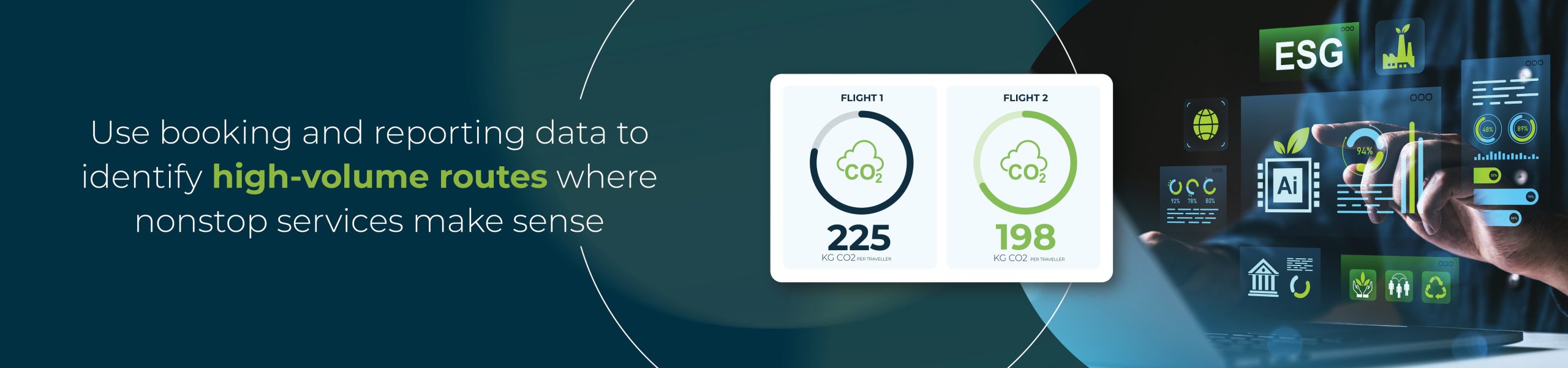
Where possible, direct flights remain one of the simplest ways to reduce emissions. Fewer take-offs and landings generally mean lower fuel burn, fewer delays, and a better traveler experience.
Use booking and reporting data to identify high-volume routes where nonstop services make sense. Work with CTM and airline partners to balance sustainability, cost, and traveler well-being.
2. Think sustainability on the ground
Ground transportation choices can significantly influence emissions. Review whether your travel policy encourages:
- ride-sharing or shared transfers
- electric or hybrid rental vehicles
- public transportation over single-occupancy car use.
Small policy changes can deliver meaningful sustainability and cost benefits.
3. Align hotels and meetings with transport access
Hotel and meeting location matters. Hotels near public transportation, offices, or client sites make sustainable travel choices easier for employees.
Travel program data can help identify opportunities to adjust preferred hotels or venues in ways that reduce emissions and improve the traveler experience.
4. Prioritize hotels with credible sustainability practices
Hotel sustainability has evolved far beyond towel reuse programs. Many hotels now invest in energy efficiency, water conservation, waste reduction, and responsible sourcing.
Factor sustainability credentials into hotel sourcing and preferred programs, and clearly communicate the benefits to travelers.

5. Measure what matters
Progress starts with visibility. Many organizations now track business travel emissions:
- By trip and traveler
- By service type, including air, hotel, car, and rail
- By supplier and fare class
- Over time, to measure progress against targets
These insights support smarter policy decisions, supplier negotiations, and ESG reporting.
6. Use technology to support more sustainable choices
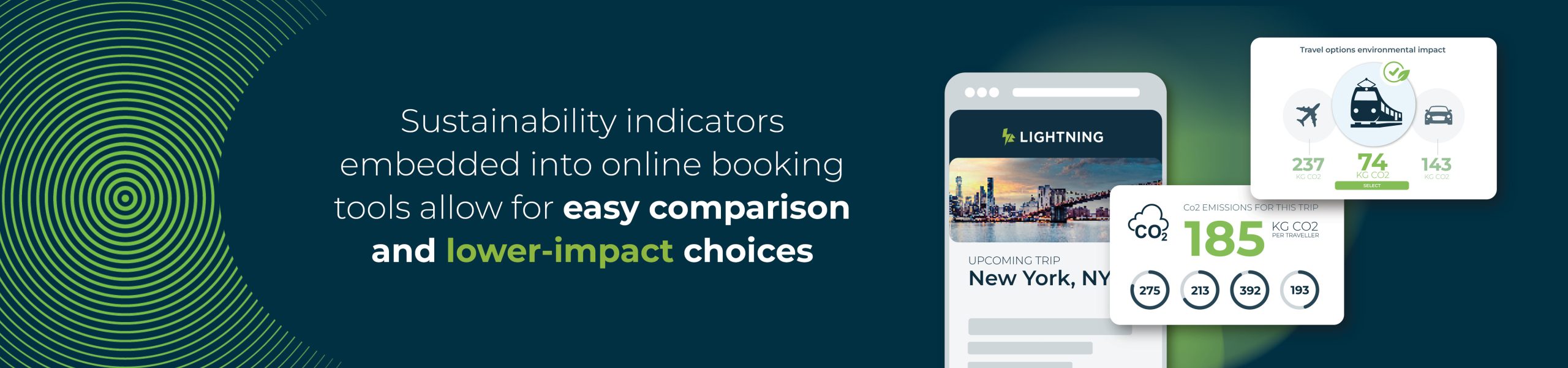
Travel technology plays an important role in helping travelers make more sustainable decisions at the point of booking.
When sustainability indicators are embedded into online booking tools such as CTM’s Lightning and alongside price, policy, and schedule, travelers can easily compare options and choose lower-impact alternatives without added complexity.
7. Extend reduce, reuse, recycle to life on the road
Encourage travelers to carry sustainability habits with them by:
- Using mobile itineraries instead of printing documents
- Packing reusable bottles and amenities
- Choosing local dining options where possible
These small actions help reinforce sustainability awareness across the travel program.
8. Embed sustainability into your travel policy
It is always a good idea to review your travel policy through a sustainability lens.
Clear guidance on booking behavior, supplier preferences, and traveler expectations helps align sustainability goals with everyday travel decisions.
9. Engage travelers through incentives and visibility
Traveler engagement plays a critical role in program success. Incentives, shared goals, and progress updates can encourage more sustainable choices and build participation.
When travelers understand the impact of their decisions, adoption increases.

10. Work across teams
Sustainable business travel touches procurement, sustainability, HR, finance, risk, and traveler well-being.
Collaboration across these teams strengthens outcomes and highlights the broader value that travel programs deliver to the organization.
Build a more sustainable travel program
Book a demo with CTM and learn how
What is a sustainable business travel program?
A sustainable business travel program focuses on reducing the environmental impact of business travel while still supporting business objectives. This includes smarter route selection, sustainable suppliers, emissions tracking, and traveler engagement.
How can companies reduce emissions from business travel?
Organizations can reduce travel emissions by prioritizing direct flights, using public transportation, selecting hotels with sustainability certifications or practices, encouraging rail where possible, and tracking emissions through travel reporting tools.
Is sustainable business travel more expensive?
Not necessarily. Many sustainable choices, such as direct flights, shared ground transport, and data-driven hotel sourcing, can improve efficiency and reduce overall costs while supporting sustainability goals.
How does business travel impact Scope 3 emissions?
Business travel typically falls under Scope 3 emissions, which include indirect emissions across the value chain. Measuring and managing travel emissions is an important part of broader ESG and sustainability reporting.
How can travelers support sustainability while traveling for work?
Travelers can support sustainability by choosing lower-emission options when available, using public transportation, staying in sustainable hotels, minimizing waste, and following company travel policies.