


Balancing travel policy compliance with the traveler experience
The modern business traveler is changing. Remote work and global events have shifted expectations. What mattered a few years ago may no longer apply today.
According to Concur, 96% of global business travelers are willing to travel for business over the next 12 months.
Why travel policies need to evolve
Many companies still apply the same travel policy year after year. This approach no longer works.
Employees now expect more flexibility. They want travel programs that align with how they work and live.
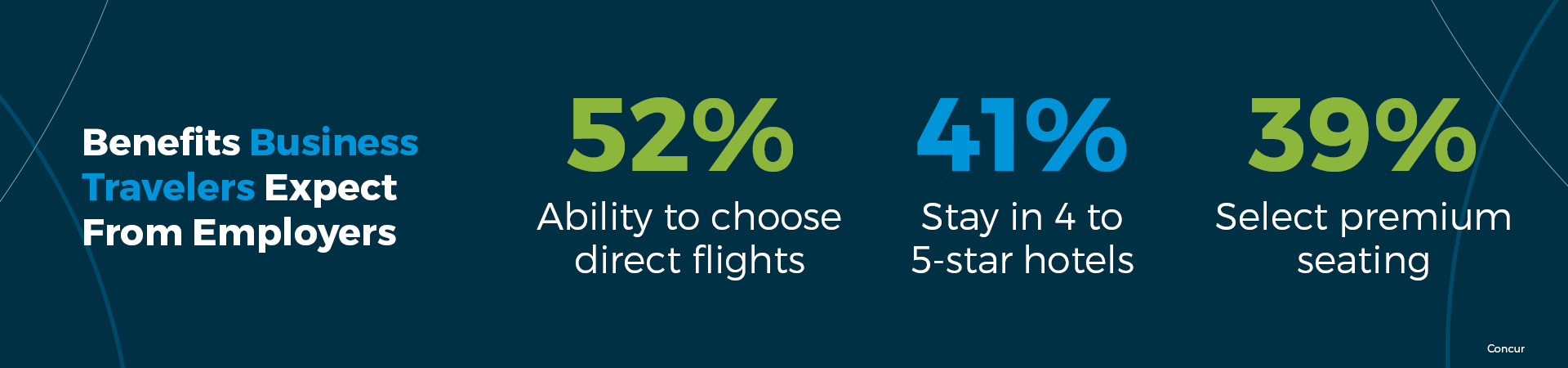
Concur research shows that travelers value:
- Direct flights (52%)
- Four- to five-star hotels (41%)
- Premium seating options (39%)
Companies that update their policies can better balance compliance, traveler experience, and engagement.
Understanding the modern-day traveler
Hybrid work has raised expectations across the entire travel experience.
Travelers now prioritize comfort, safety, and convenience. In many cases, these factors outweigh cost savings alone.
Duty of care remains criticial. Corporate Travel Management’s (CTM’s) 2021 Business Travel Survey demonstrated that traveler risk, safety, and well-being were the top priorities for travel programs in 2022.
Today’s travelers also want more transparency. They expect to see safety and cleanliness standards for airlines, hotels, and airports at the time of booking.
At the same time, bleisure travel continues to grow. According to the 2022 American Hotel and Lodging Association report, 89% of travelers plan to add personal time to business trips.
This shift increases demand for flexibility across travel dates, suppliers, and itineraries.

The impact on recruitment and retention
Travel policies now influence talent decisions.
Employees consider travel experience when choosing an employer. This makes travel programs a key factor in recruitment and retention.
According to the Global Business Travel Association:
- 79% of North American travelers say travel impacts job satisfaction
- 83% in Europe and 81% in Asia-Pacific agree
- 59% of North American travelers consider travel policy when evaluating a new role
This creates an opportunity. Organizations that improve travel programs can strengthen employee engagement and retention.

Building a traveler-focused travel program
Leading organizations take a more traveler-focused approach.
They include ancillary services such as dining and parking in their policies. They also measure traveler satisfaction across key areas, including:
- Air travel
- Hotels
- Ground transport
- Dining
- Parking
- Bleisure
GBTA research shows that around 60% of buyers who measure these areas report strong improvements in traveler satisfaction.
Many organizations also link traveler satisfaction to cost savings and compliance.
References
[1] GBTA – Traveler satisfaction outlook: Are companies focused on what matters? 2019