
Why travel program management requires structure before change
Learn WhyRolling out any change to a travel program rarely breaks down during implementation. More often, it begins to lose strength much earlier.
Organizations typically recognize when change to their travel program is required. This can be a result of technology evolving, distribution models shifting, or governance requirements expanding. Mergers, acquisitions, and growth also create new operational demands, and travel programs must respond.
What undermines progress is not the intent to change. It is the absence of structure at the start.
In effective travel program management, change is not a single event or system update. It is a coordinated transition that affects people, processes, suppliers, and technology simultaneously. When that transition is not deliberately planned, even well-designed initiatives can struggle to deliver the outcomes required.
Managing change across your travel program?
Where early-stage risk emerges
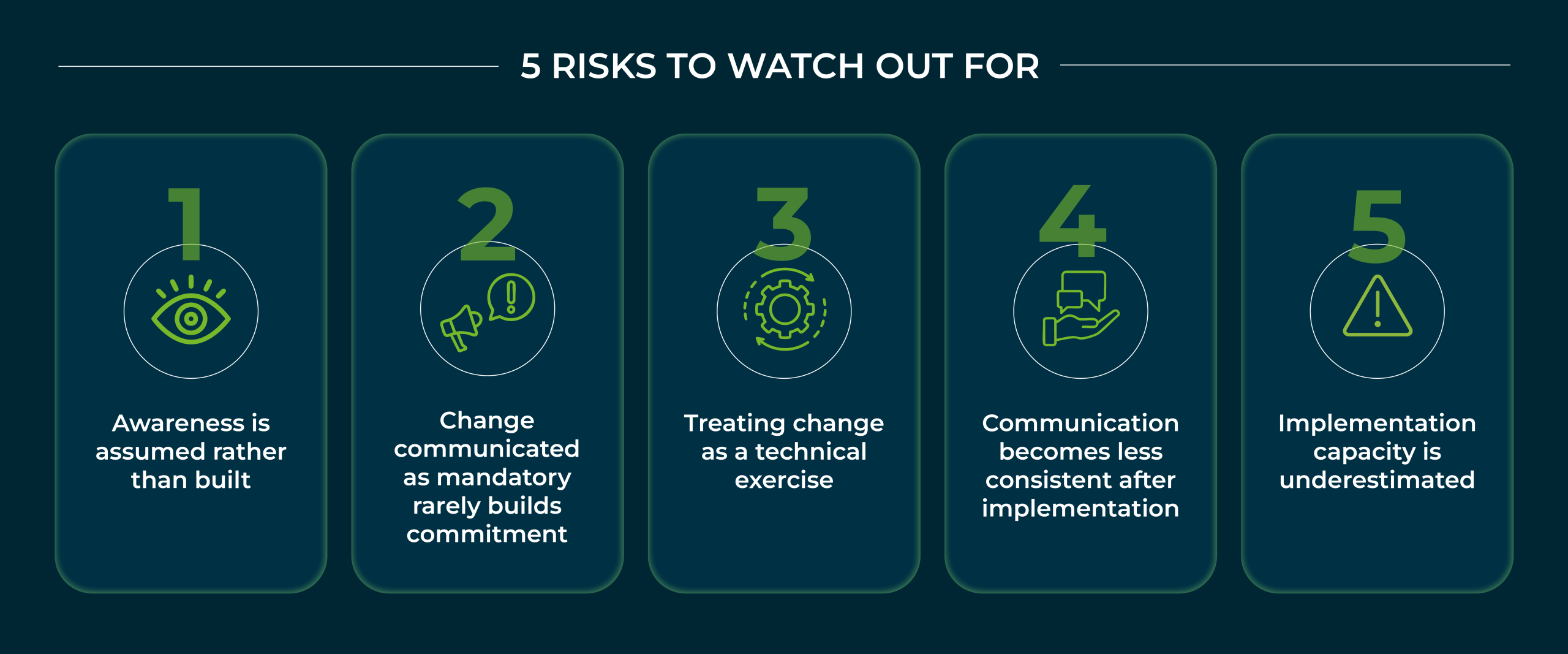
One of the most common breakdowns occurs when awareness is assumed rather than built. Travel managers may clearly understand the rationale for change, but stakeholders across finance, HR, IT, and operations often see only their portion of the impact. Without context, adjustments can feel disruptive rather than purposeful. Over time, quiet resistance can slow adoption before rollout has fully begun.
Closely linked to awareness is the desire for change. Change that is communicated as mandatory may achieve surface compliance, but it rarely builds commitment. Travel program management requires engagement across multiple stakeholder groups, each with different priorities. If the benefits are not translated into outcomes that matter to those audiences, alignment weakens early.
Another frequent misstep is treating change as a technical exercise. Upgrading a booking tool, adjusting a travel policy, or consolidating travel suppliers may appear operational on paper. In practice, these shifts alter established routines. Booking behaviors, approval workflows, reporting processes, and traveler expectations are shaped by habit.
When enablement and training are delivered once, rather than staged and reinforced, workarounds begin to emerge. Travel program adoption drops gradually, not dramatically, which can make early warning signs easy to overlook.
Communication patterns also play a role. Initial announcements are often clear and well-supported. As implementation progresses, communication can become less consistent. In global programs, this creates variation in interpretation across regions. Travel program management depends on clarity and repetition, particularly when change touches policy and governance.
Finally, implementation capacity is often underestimated. Travel managers are balancing operational delivery alongside transformation initiatives. Without defined ownership, milestone tracking, and structured oversight, projects can stall under competing priorities. Change fatigue compounds the risk when multiple initiatives are introduced simultaneously.
The impact of early misalignment
When structure is missing in the early stages, the consequences rarely appear overnight. They accumulate.
- Adoption declines gradually
- Policy adherence becomes inconsistent
- Reporting accuracy can weaken
- Stakeholder confidence erodes
These outcomes are not the result of poor strategy. They reflect insufficient alignment before rollout.
Change itself is not the risk. Unmanaged change is.

Embedding structure into travel program management
Change management frameworks emphasize building awareness and desire before implementation begins. They reinforce the importance of delivering knowledge in stages, developing practical ability, and sustaining reinforcement over time. This is particularly relevant in travel programs, where repeated behaviors drive performance outcomes.
Travel program management that integrates structured change principles from the outset is better positioned to protect compliance, maintain visibility, and support adoption. It shifts the focus from launching initiatives to embedding them.
As business travel programs continue to evolve, travel managers are expected to guide adaptation while maintaining governance. That responsibility makes early alignment more important than speed.
If your organization is preparing for policy updates, technology upgrades, or broader transformation, Corporate Travel Management (CTM) can help you assess your approach and support stronger alignment, adoption, and long-term performance.
For a deeper dive into how structured change supports long-term travel program performance, download our eBook, Managing Change in Modern Travel Programs.